Author name: wellness

Alcohol Withdrawal Support Guide (1)
Counseling, Health and Wellness, Mental Care, Psychiatrist, Psychology

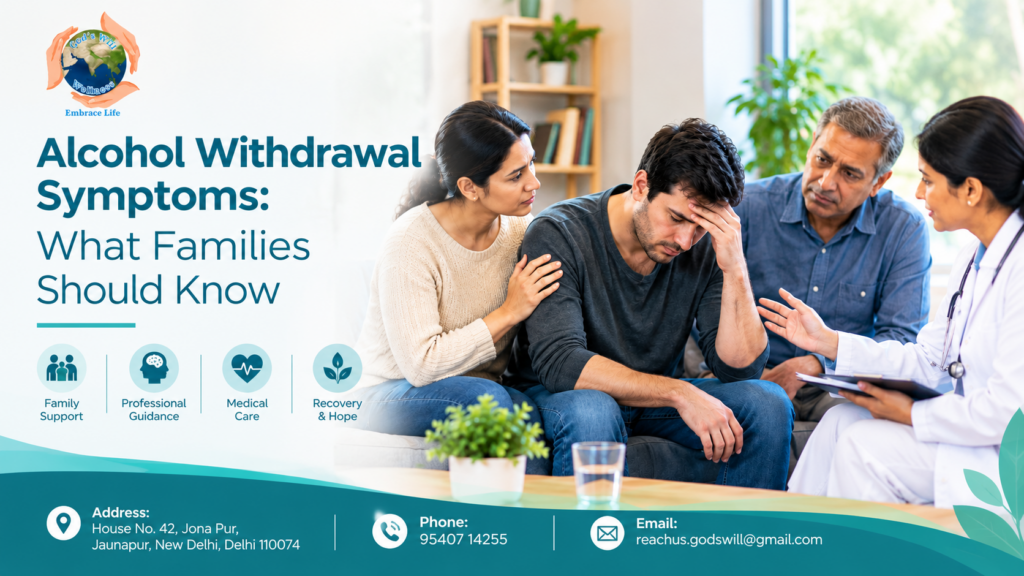
Alcohol Withdrawal Symptoms: What Families Should Know

Introduction For members of a family unit to choose to quit drinking, it could mean taking an initial step towards a healthier life experience. However, there are many difficulties associated with the post-withdrawal phase that should be understood by members of families. Alcohol withdrawal is a condition whereby an individual, who used to drink alcohol heavily or regularly, decreases or quits from consuming it, and the body starts adapting to the absence of alcohol. It is important to know the warning signs in order to be more patient, compassionate, and provide appropriate medical attention at the right time. At GodsWillWellness, we understand that recovery doesn’t affect the individual alone but all the people close to him/her. Causes of Alcohol Withdrawal Alcohol is known to have an effect on the brain and nervous system. Prolonged and excessive consumption of alcohol by the body makes the body accustomed to its effects. A reduction or sudden cessation of alcohol consumption may result in the nervous system becoming overly active, which causes withdrawal symptoms. However, how severe the symptoms are may differ depending on factors including the drinking history of the individual, general health, whether there were previous withdrawal symptoms, among others. It should be noted that families should not assume that an individual will only have mild symptoms due to seeming healthy. GodsWillWellness recommends that families consult professionals instead of dealing with withdrawal symptoms on their own. Common Symptoms of Alcohol Withdrawal That Families Should Know About The onset of symptoms of alcohol withdrawal can vary from several hours to days after the final alcoholic drink. Being able to recognize the early symptoms will allow the family to give the right care. 1. Trembling and sweating Some early symptoms of withdrawal include shaking hands, sweating too much, and feeling unusually restless. The individual may feel uncomfortable in an otherwise cool environment. It is vital that GodsWillWellness emphasizes the significance of paying close attention to these physical symptoms, especially those that occur along with others. 2. Feelings of anxiety and irritability Some people start feeling nervous, impatient, and unusually irritable. They experience excessive worrying and cannot relax. Family members can calm them without criticizing the person. 3. Digestive problems such as nausea and vomiting There might be some digestive symptoms including nausea and vomiting. Continuous vomiting can result in dehydration. 4. Headache and sleeping problems Headaches, insomnia, lucid dreams, and sleep disturbances may complicate the treatment process. A person who hasn’t slept well for a number of days may experience exhaustion, frustration, and emotional disturbance. 5. Increased heart rate and high blood pressure Racing heart, elevated blood pressure, and restlessness are also withdrawal symptoms that should not be overlooked. How Families Can Help Their Loved Ones During the Period of Withdrawal Helping your close person would require patience and understanding, along with clear expectations of what you can do. While providing emotional support is very important, it does not substitute the need for professional help in case of withdrawal symptoms. Families can find a professional advice for overcoming addictions at the Nasha Mukti Kendra in Gurgaon. What kind of help will be required by each person would depend on his or her current condition. Emotionally support the person. Talk to him or her in a friendly way, listen and do not criticize. Addiction may damage relationships, yet criticizing people is usually not a good method of encouraging them to seek help. Advise your family member to visit a doctor. Do not think that it is possible to stop consuming alcohol safely in case the person had been abusing this substance earlier. The medical specialist will be able to evaluate the situation and give recommendations. Keep the environment safe. Remove any unneeded stresses, avoid conflicts, and assist the person to access healthcare services. Don’t leave an individual who is suffering from serious symptoms alone. At GodsWillWellness, we realize that it can be terrifying and exhausting for the family at this time. It is okay to ask for help. Serious Withdrawal Symptoms That Need Emergency Assistance Sometimes, alcohol withdrawal symptoms may result in dangerous situations. Delirium tremens may lead to some very serious effects such as confusion, agitation, fever, hallucinations, and heart rate or blood pressure changes. Seizures due to alcohol withdrawal are considered one of the dangerous consequences. In case the patient experiences a seizure, confusion, hallucinations, problems with breathing, and difficulty waking up, the family should contact emergency services. Never wait for symptoms to go away on their own. GodsWillWellness advises the family to consider these symptoms to be a real emergency situation rather than a sign of bad behavior. Keep the patient safe until professional help arrives and do not provide any homemade treatment like alcohol or medications. The Importance of Professional Treatment A professional treatment program could help in the management of the withdrawal symptoms and tackle the issues surrounding alcohol dependency as well. Based on the requirement of the person, professional medical care will include the monitoring of vitals, hydration, the intake of medications and nutrition. After the withdrawal period, other types of treatment such as counseling, behavioral intervention, relapse prevention, and education of the family could be considered. Such treatments would help the patient to learn about their pattern of consumption and healthy coping skills. The families seeking treatment should also consider visiting a Nasha Mukti Kendra in Faridabad to learn about the treatment facilities at their disposal. It is essential for the center to have medical supervision, qualified professionals, emergency plans, and an individualized treatment program. GodsWillWellness acknowledges that recovery takes time. The right environment for treatment can assist the patient in achieving their goals and give the family members an opportunity to be involved productively. Avoiding Certain Behaviors While Recovering from Substance Dependence Not all actions that are well intended are usually safe. It is vital to avoid putting pressure on an individual to withdraw by himself, giving any sedatives not under prescription, and using home remedies that are unproven. Alcohol should not be used to control
Aftercare Support_ Stronger Recovery
Counseling, Health and Wellness, Mental Care

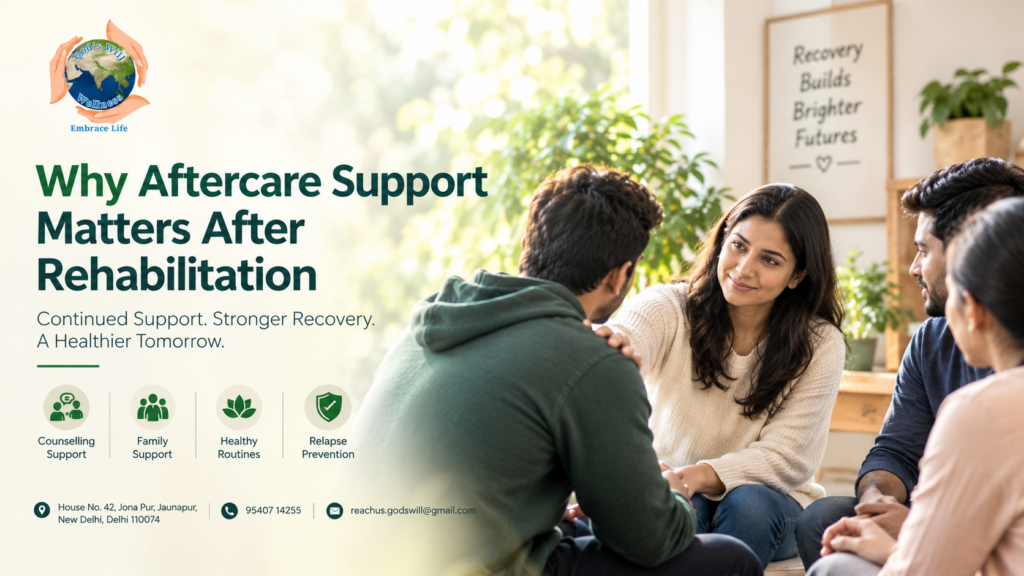
Why Aftercare Support Matters After Rehabilitation

Introduction Completing a rehab program is something important, but getting back to normal life poses a whole new set of problems. The individual has been living in a well-controlled environment, and now he must take care of himself and his responsibilities, relations, stress, and choices on his own. If the person does not get additional help, the simplest of the tasks might become difficult for him. Recovering is a step-by-step procedure. Recovery means acquiring self-respect, learning new habits, and making healthy choices. Continuous help might be of great use in implementing all the things that a person learned during therapy into the practice. For most people, GodsWillWellness becomes a symbol of the idea that overcoming addiction is a lengthy and complicated process that requires one to move on to the future. Aftercare is the place where one can discuss his problems related to recovering and receive the help of professionals in achieving his goals. What is Aftercare Support? Aftercare refers to the support that one receives following completion of a rehabilitation program. This helps to transition from the treatment process into a life of independence. In a rehabilitation process, patients may get counseling services, coping skills, and a routine that is based on their requirements. After going back home, they may need to implement some of those skills when dealing with issues such as family commitments, work-related, social, or emotional issues. Some of the elements of aftercare plans include Counseling and follow-up sessions Recovery support groups Guidance of the family members and communication support Managing of cravings and emotions Development of healthy routines and engaging activities Referral to other medical or psychological professionals if required Each plan should be based on individual needs. GodsWillWellness supports a strategy whereby each individual patient is considered unique rather than the same recovery program for all. Why Is Aftercare Essential After Rehabilitation? 1. It Enables Individuals to Consolidate Their Gains Rehabilitation may allow individuals to gain insight into their behavior, understand negative patterns, and learn healthy approaches to dealing with stressors. However, sustaining such gains after rehabilitation requires effort and time. Aftercare gives an opportunity to evaluate the gains made and talk about the difficulties one may experience before they get out of hand. Conversations with a therapist can enable one to understand what they are doing right and where they need more help. It is common for individuals to make gains not in a straight line but rather in waves. One week may be encouraging while another may bring disappointments. Having someone to talk to can encourage them to set realistic goals. The importance of continuing therapy at GodsWillWellness is the understanding that being through rehabilitation is only one step in the recovery process. 2. It Assists with Stress and Triggers Management Stress, feeling alone, conflicts, financial stress, and some social settings can make it hard to cope with recovery. Others might come across people or environments that remind them of their past abuse of substances. Aftercare assists clients to pinpoint their own triggers and plan an appropriate reaction. An individual who finds socializing stressful might consider how he will get out of the situation or speak with his counselor about the problem. Learning to take time out, realize what is going on emotionally, and seek help can make it less difficult to deal with such issues. It does not make every problem go away, but it makes dealing with it easier. 3. It Promotes Good Routines A routine can add structure even after the patient is rehabilitated. Basic activities like waking up at the same time each day, having proper meals, doing appropriate exercises, and completing their duties for the day can contribute to bringing stability. Other activities that people do to add meaning to their day include pursuing leisure, learning, working, or other areas of interest. These can aid in rebuilding confidence and allow one to interact socially. GodsWillWellness understands that lifestyle changes come from small steps that are taken gradually rather than trying to make all the changes in one day. The Importance of Counselling and Professional Assistance Counselling will enable people to understand their feelings, resolve personal problems, and enhance their coping mechanisms. Counselling will also provide a venue for discussing those problems, which people feel uncomfortable discussing even with family and friends. Based on their requirements, individuals can receive individual counselling, group counselling, family counselling, medical follow-ups, or any other form of continuing care recommended by the professional. Those who require additional assistance can make use of a Nasha Mukti Kendra in Gurgaon to become aware of all the treatment and recovery programs available. Selecting an appropriate program will require asking about the qualifications of professionals, the services provided, follow-up arrangements, and personalized care. Not all programs fit everyone, and therefore, one must know about the programs before joining them. How Family Support Helps Coming home will have an impact on the entire family. The loved ones could feel relieved and optimistic but might also be worried about any relapses or issues regarding trust. It is natural for them to feel this way because of how addiction has taken its toll on the relationship. Family support will work most effectively if they combine support with appropriate boundaries. The family could listen to them without being judgemental, notice the improvements, and try to keep the household stable. The family can encourage attendance to the sessions and encourage good habits. The families must realize that they do not have control over anyone’s sobriety. What they can do is provide support without sacrificing their own health. It is useful to use family therapy for the purpose of better communication and learning how to deal with problems that might appear. GodsWillWellness believes in the importance of patience and communication when supporting a healthier future. Suitable Recovery Facilities in Delhi NCR Appropriate facilities can make the process of following the recovery process easier for individuals and families. It is recommended that the individuals seeking information look into the needs of the individual,

Nasha mukti kedra in south delhi
Rehabilitation Centre

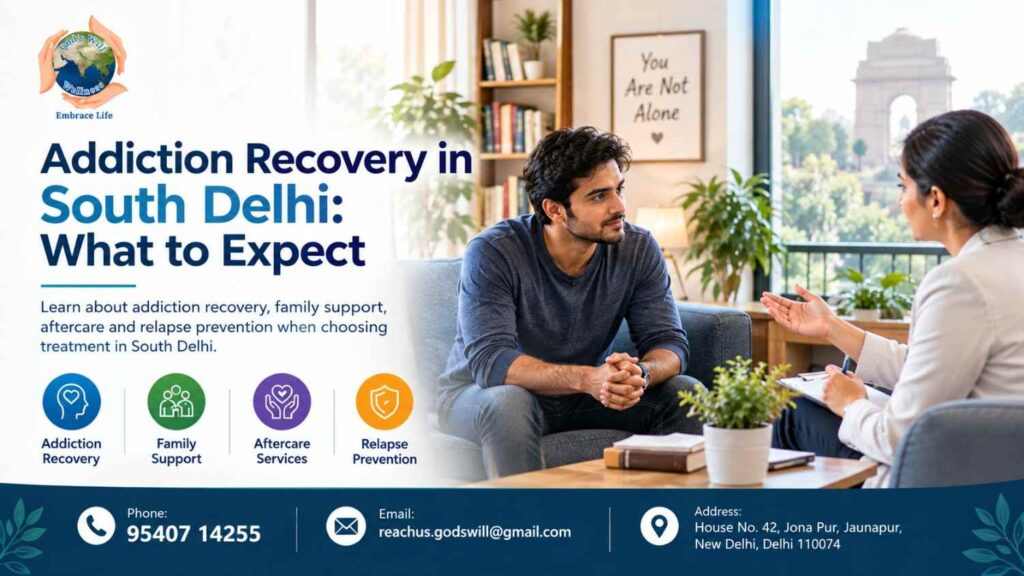
Addiction Recovery in South Delhi: What to Expect

The substance misuse epidemic can have negative impacts on a person’s physical health, mental health and wellbeing, personal relationships, finances, work, and overall ability to fulfill their day-to-day responsibilities. Using substances in a manner which cannot be controlled can be an important incentive for seeking the help of addiction professionals. Located in South Delhi and Chattarpur, residents have access to multiple addiction treatment options, but it is important to consider each one carefully. A reputable nasha mukti kendra in south delhi should offer much more than a temporary relocation. Rehabilitation centres must have the capacity for individualized care in order to create a plan for the patient and the family, in which care and counseling are integrated and designed to help the patient return to their life after treatment. God’s Will Wellness centres focus on providing compassionate, holistic care to support individuals and families in their recovery from substance dependency. Knowing what to expect from rehabilitation programs can help families choose addiction treatment programs with more confidence. Signs and Indicators of Addiction and Where to Find Help Substance use may start when a person uses substances occasionally, but may begin to interfere with a person’s day to day functioning. It begins to interfere with relationships and may even increasingly have a negative financial and personal impact. Recovering from addiction is a holistic process. It includes healing collected trauma, behavioral and emotional issues, and the estranged relationships. It also addresses better coping mechanisms and the triggers which may make returning to substance use inevitable. Families should not make judgements about rehabilitation centres based on their first impressions. Centres vary based on the totality of the programme and factors such as the approach, type and quality of staff, environment, types of counselling, safety policies, and the type and duration of after care provided. What Rehabilitation Programmes Offer Rehabilitation programmes offer an environment to foster recovery. Specifics vary from one rehabilitation centre to the next so be sure to ask all the relevant questions. Assessment and Recovery Plan Treatment begins with the assessment of the individual, which includes understanding the substance use history, current situation, and family situation, and may include the individual’s treatment history, recovery goals, and current challenges. An individualized plan allows for treatment to be tailored to the individual and is more effective than a pre-made plan for all. Counselling to Change Behaviour Reason and situation counselling helps the individual to understand reasons behind substance use and to manage challenges faced during the recovery process. Counselling helps recovering individuals to identify and manage emotional issues, unhealthy patterns, and problems they have during communication and to develop an ability to self-manage and respond to the triggers in effective ways. Individual counselling provides the individual with an opportunity to address their issues in privacy, while group sessions enable participants to learn from each other. A Consistently Structured Day A structured day routine provides an environment that provides recovery stability. Most rehabilitation programmes provide counselling, therapeutic activities, recreational and educational sessions, rest, exercise, and opportunity for personal reflection. Structured routines help develop responsibility for recovery. Family Involvement Addiction creates stress for many family members. Because of the addiction, families may experience a lack of financial resources, relationship issues, and uncertainty. Family involvement allows family members to develop a better understanding of addiction itself and better understand how to communicate constructively. Family involvement can also aid a family in developing appropriate realistic expectations and support to avoid unwittingly supporting the addiction. Choosing a Nasha Mukti Kendra in Chattarpur Location of the Nasha Mukti Kendra can also be important. Patrons from South Delhi and the Chattarpur region may prefer a facility that is easily accessible from their location, but also offers a safe treatment facility. When considering a Nasha Mukti Kendra in Chattarpur, families should assess more than just what is advertised. Treatment Approach Families should ask the Nasha Mukti Kendra to describe the alcoholism, drug addiction, or other substance dependency’s treatment approach. A reputable Nasha Mukti Kendra should be able to explain their treatment approach in simple language. Qualified and Experienced Staff Families should ask the Nasha Mukti Kendra about the employees that provide counseling and support, as well as the staff’s experience and training in addiction recovery. They should also ask the Nasha Mukti Kendra about their response to situations requiring medical assistance. Individual Attention When considering a Nasha Mukti Kendra, it is important to understand if the program provides individual counseling and recovery support and plans. Group activities should not be the mainstay of a recovery program. Safety and Supervision A safe and supportive environment means that there are clearly established systems to address resident safety and the immediate needs of the residents. What is the Nasha Mukti Kendra’s plan if a resident develops a psychological or medical issue during treatment? Communication With Families Find out how and when families get updates. Communications that are direct, yet respectful, let families know what is going on without telling everything. Why Families Should Look Beyond the Word “Best” Most searches have the phrase “best nasha mukti kendra” or “best rehabilitation centre” in them. Despite the best in the name, many programs may not be the best for every individual. Treatment for addiction needs to consider the individual. A program that is best for one may be of no use to another. Instead of opting for a centre that calls itself the best, families need to consider the following: What services do you offer? Who conducts the sessions of counseling and recovery? How do you develop individualized recovery plans? What services do you provide to the family? How do you ensure prevention of relapses? What happens after the residential treatment? How do you address any medical or psychological concerns? Families can compare different treatment services based on the substance use, and not just on overused marketing language. Understanding the Role of a Rehabilitation Centre in South Delhi A rehabilitation centre in South Delhi is a safe place for individuals to work on their recoveries

Nasha mukti kendra in gurgaon
Rehabilitation Centre

Addiction Treatment in Gurgaon | God’s Will Wellness

Decisions regarding treatment for drug and alcohol addiction are often difficult for the individual and their family. Addiction invasion can impact physical health, psychological well-being, relationships, employment, finances, and daily living. A professional treatment centre can provide necessary structure, counseling, direction and continued support to assist an individual as they work toward lasting behavioral and lifestyle changes. Families searching for nasha mukti kendra in Gurgaon will come across many treatment providers and different approaches. However, many facets of treatment need to be considered to make the most appropriate choice. This will include the individual’s family, the substance the individual uses, the physical and psychological status, recovery goals, and the professional supports available. God’s Will Wellness ensures that both the individual and their families have the necessary support and guidance throughout the recovery process. Understanding Addiction and the need for Professional Rehabilitation Addiction can comprise physical, psychological, emotional, behavioral and environmental elements. Addiction can impact even the most serious consequences an individual may experience, as they may continue to make poor choices and continue to use drugs or alcohol. Treatment can provide structure, medical support, counseling, behavioral support, family participation, relapse prevention, and continued support. A rehabilitation centre in Gurgaon may offer a structured environment for individuals to remove themselves from environments that promote substance use for a period and focus on recovery. It is, however, important to consider that the quality and fit of treatment may differ between centres. Treatment Available during Addiction Recovery There is no uniform approach to addiction treatment. The starting point should be a careful assessment and understanding of the individual and their circumstances in order to develop a treatment and recovery plan that is appropriate for the person. Initial Assessment and Individual Treatment Planning The first step is assessment of the person’s substance use, their treatment history (if any), their physical and emotional well-being, family and support system and their goals for recovery. An individualised treatment plan may suggest various forms of support, some participants may require more intensive care, while others may benefit from less intensive care, counselling and structured rehabilitation support. Treatment plans developed for participants should not be inflexible, but should involve the review of treatment plans as the participant’s recovery goals are achieved. Alcohol Addiction Recovery Alcohol addiction impacts all aspects of a person’s employment, family and daily living. Recovery involves identifying negative consequences and patterns of alcohol use, controlling and reducing alcohol use, and building a healthier and more productive daily routine. Some individuals need a complete assessment by a professional before alcohol is stopped abruptly. Families should explain the person’s drinking to people in the industry. They should also determine what level of support is needed. Drug Addiction Recovery The recovery from drug addiction may include behavioural support, counselling, structure, and professional help. The goal will be to provide support and minimise the risk of continued substance use, while also developing more positive and less harmful coping behaviours. The specific method will depend on the substance used, the duration and the intensity of the use, the person’s treatment history, the substance, and their individual adverse conditions. Assessing A Rehabilitation Centre in Gurgaon It is vital to select a treatment centre with careful consideration. A rehabilitation Centre claiming to be one of the best in Gurgaon should not be the only income criterion of the evaluation. Families should evaluate any claim made by the treating agencies. Assess The Treatment Approach Personalised care and attention depict the quality of treatment. Families must know what happens at every step of the recovery process, from admission to the aftercare journey. Change the plan. Aims of treatment must be achieved. Assess Recovery Environment Environment can impact a person’s comfort level and engagement during treatment. Families need to review factors, like, cleanliness, privacy, routine, room and family accommodations, recreation, and the environment as a whole. A structured environment can assist residents with developing healthy routines, but should incorporate amenities that preserve dignity and offer respect. Understand Participation of Family Members Addiction affects a person’s family. Parents, spouses, children, siblings, and other family members can experience emotional stress and relational difficulties. Family participation in counselling and educational sessions helps families to gain an understanding of addiction, enhance relational communication, set healthy limits, and provide supportive assistance. Address Relapse Prevention Recovery from treatment does not mean a person is no longer recovering. Exposure to old routines and old environments can activate old behaviours and habits. A strong rehabilitation program will incorporate relapse prevention. This can include the development of early warning system support, emergency support plans, coping strategies, and identification of personal relapse triggers. Review Post-Treatment Support Although a person may have completed treatment and returned to their home, support services need to remain in order to assist with the transition. Support can include participation of family members, support groups, monitoring of efforts, and continued recovery planning. What Individuals can Expect During Rehabilitation For someone who has never been to any rehabilitation centre, the whole experience can be quite overwhelming. Familiarise yourself with the structure to help minimise the challenges experienced during the transition. In the early stage, staff will gather information on substance use, health, and personal info, as well as recovery plans. The individual will partake in recovery-centred activities and have time for individual and group interaction and recovery-centred activities. The focus of the treatment may shift to identifying and managing recovery triggers, regulating emotions, building interpersonal relationships, creating healthy practices, and preparing to leave treatment and engage in the community. Because recovery is more of a long-term process than a one-time event, individuals may experience treatment in multiple ways. Why Families Should Compare Treatment Based on Individual Needs Families have been known to look for treatment facilities that they refer to as ‘the best’. There is no facility that can be considered ‘the best’ for everyone. For example, the individual that is primarily suffering from alcohol addiction may have different needs than the individual that has suffered from long-term drug use. Another person’s

nasha mukti kendra in delhi
Therapists

How To Choose A Best Nasha Mukti Kendra | God’s Will Wellness

Finding the right rehabilitation centre is an important first step for an individual struggling with substance use and their loved ones. The right environment can offer an addict the structure, professional care, and the tools required to initiate the journey of recovery. When searching for the best nasha mukti kendra in Delhi, families should dig deeper than the advertisements and research what services are offered, the surrounding environment, and the overall care and support the centre is able to offer. The recovery process from substance use becomes less about stopping the use of the substance, and more about the root causes of substance use and rehabilitation of relationships, development of positive coping mechanisms, and planning for long-term recovery. God’s Will Wellness offers a safe and supportive space for its clients to facilitate rehabilitation of the addicted individual while also allowing families to take an active role in the recovery process. Why One Rehabilitation Centre is Different from Another Every individual’s lived experiences are different, and so are their experiences with addiction. An individual may struggle with having drinking issues while another individual may struggle with addiction to drugs, prescription or illicit. Emotional stability, family matters and pressures, recovery from past treatment experiences and social issues may also affect recovery. The ideal Rehabilitation Centre in Delhi should offer an individualised support structure. These centres should avoid providing a one-size-fits-all solution. Before arriving at a decision, families should consider the following: Each and every aspect of the centre’s overall treatment approach The availability of trained professionals Counselling and behavioural support Appropriate detox program arrangements Living environment and daily program structure Extent of family participation Individualised recovery goal development Relapse prevention counselling Support and commitment during the recovery journey beyond the facility Each of these components will help families make a more informed decision regarding rehabilitation. Treatment Approach The first thing to ask a treatment facility is how they approach addiction treatment. A responsible treatment centre should be able to provide detail on the various services and how each of the services contribute to the recovery of the individual. Treatment can include many services and may include assessment, detoxification, counselling, education, behavioural support and planning, family therapy, and training, as well as a variety of activities and services. Detoxification isone aspect of recovery Some individuals may require withdrawal from addictive substances as a necessary first step in a physical withdrawal. It is important to note detox alone does not resolve a substance use disorder and that resumption of use can easily occur. Families must also inquire on the next steps for the individual following withdrawal. Effective and meaningful programs of recovery must deal with the individual’s behaviour, emotional issues, relationships, and how to deal with the challenges of keeping a long-term commitment of abstinence from substance use. When withdrawal may involve significant medical risk, families should understand what medical support is available and who may be responsible for medical supervision. Consider Counselling and Support Counselling may help individuals understand their substance use and may help identify behavioural patterns that contribute to their substance use. A rehab program should include the option for individual and/or group counselling. These counselling sessions should address trigger management, expressions of feelings and thoughts, and developing effective goal directing coping mechanisms for the recovery process. When looking for a nasha mukti kendra in Delhi, families should request information concerning the counsellors, how many sessions they offer, and if the treatment program is flexible to address the client’s needs based on his/her/their progress. God’s Will Wellness is dedicated to helping individuals with recovery support within an environment focused on caring support and dignity. When considering a rehabilitation facility, look at the treatment environment. The treatment environment may impact the treatment process each day. A treatment centre should provide an environment that is both supporting and structured to eliminate some of the things that may contribute to substance use. Consider if the centre has Clean living areas A structured daily schedule Rehabilitative activities Counsellors Staff that is supportive and communicates respectfully A safe environment Structure and accountability are important focus areas of treatment. Ask About Individual Recovery Planning Choosing the best nasha mukti kendra is not as important as understanding how the centre approaches an individual’s needs. A specific recovery plan must address the person’s unique experiential history like their substance use, their family and support network, their emotional health, recovery aspirations and goals, and past treatment efforts. The plan should also include the process of recovery and the person’s evolving recovery needs. As the individual makes progress, the recovery plan can provide less structure and offer more recovery independence, prevent relapses, and help the person reintegrate their family and prepare for their life post recovery. Family involvement during recovery can be therapeutic. Many family members feel stress, uncertainty, and emotional and financial exhaustion from their loved one’s substance use. To ensure recovery support is offered, families must evaluate if the rehab centre has an option for family counselling or continuing family education. Families Can Be Lost Too Families are not always sure what to do or how to respond to substance use disorder. At times they are unknowingly either supporting or enabling substance use disorder. Other times, they become too confrontational. Trusted professionals can help families learn the appropriate boundaries, how to support and guide, and how to help the substance user during their recovery process. God’s Will Wellness Wellness realises the recovery process takes everyone. They support communication during recovery. Ponder Long Term Support Plans The best way to evaluate a nasha mukti kendra is to explore what they provide for post rehabilitation support. Many individuals face great challenges when they return to their normal routine upon completion of their treatment. They may also face great challenges such as substance use reminders or re-exposure to people, situations, or places they associate with their substance use. A strong aftercare plan addresses those challenges and equips individuals to address challenges in their post treatment life. What Can Aftercare Look Like?

rehabilitation centre
Counseling, Health and Wellness, Rehabilitation Centre

Choosing A Alcohol Detoxification Clinic in Delhi

Alcohol progressively deteriorates every aspect of a person’s health and life, including relationships, employment, finances, and more. The first and perhaps the most important step is the person’s decision to seek help. Unfortunately, choosing a facility often creates the most difficulty. The most appropriate environment generally offers the most support, including guidance, access to professional counseling, and a step-by-step plan that helps the person through recovery. In Search of Alcohol Detoxification Clinics in Delhi People often benefit from looking beyond the advertisements and promises that most clinics make when seeking a facility. A reputable clinic will clearly describe its approach, explain how it addresses a person’s circumstances, provide adequate family involvement, and extend its assistance beyond the first few weeks of the rehabilitation process. God’s Will Wellness has made it its mission to assist individuals and their families throughout the alcohol recovery process. This guide will help families in the Delhi NCR region understand some of the basics of alcohol recovery and learn about the clinics available to assist them. Understanding the Alcohol Rehabilitation Process The process of alcohol rehabilitation involves more than simply abstaining from alcohol. It consists of a series of steps that help an individual better understand their alcohol dependence and develop coping mechanisms that can assist them after structured treatment. The specifics vary based on the individual. A rehabilitation program typically consists of: An initial assessment and the development of a recovery plan Detox support if required Individual and group counseling as needed Support for behavior modification Family participation Relapse prevention planning Development of life skills Ongoing or post-rehabilitation care Before starting any treatment, a reputable rehabilitation programme will explain the various stages to the individual and the family. The information should avoid unrealistic examples or assurances that may give the family false hope. Start With a Proper Assessment When selecting a rehabilitation facility, families must consider the method the facility uses to provide an initial assessment of the prospective client. Alcohol dependency affects individuals differently. A rehabilitation centre must assess the drinking history, the individual’s emotional state and family circumstances, the individual’s previous treatment experiences, recovery goals, and overall history. Why Individual Assessment Matters A generic program will not address every individual’s needs. Through the initial assessment, the rehabilitation team gains an understanding of the priority areas and the range of support the individual will require. Families of prospective clients can ask whether the centre assesses clients before admitting them to the program and how the assessment supports the recovery process. A thorough assessment ensures that families understand the support they can reasonably expect from the centre. Learn about Centre’s Methodology of Detox and Support Some individuals experience withdrawal when they stop consuming alcohol, so they should not treat detoxification as an easy process that everyone can manage without proper support. Before selecting an alcohol rehab center in Delhi, take into account the way the institution offers detoxification support and its plans to offer help medically. Detoxification Is Only the Initial Step Towards Treatment Detoxification takes care of only one phase of the treatment process, but it does not offer a full solution for dealing with alcohol addiction. During this stage, counseling, behavioral, educational, family and relapse prevention becomes essential for the patient. Detoxification support needs to be offered by the center as just a single part of a wider recovery process. Professional Counselors and Behavior Therapy Search Counseling helps people understand the pattern of their drinking and adopt healthy means of coping with their problems in life. This will depend upon the type of program being offered that may include one-on-one counseling sessions, taking part in discussion groups, behavior therapy, and more. One to One One-on-one counseling sessions are a place where people can talk about personal issues and fears along with their goals. Group Interaction Group interaction can help to foster active engagement and make a supportive environment for those who have common problems. While researching about the best alcohol rehabilitation center in Delhi, the family needs to know about the qualifications and expertise of the counseling professionals and how many sessions they conduct weekly. They need to also take some time to learn about the importance of family support. Alcoholism can create many problems for the families and relatives as well as cause financial and emotional burdens due to relationship changes. Family support is very important in recovery from addiction. A good rehabilitation program gives families an opportunity to understand the nature of alcohol addiction and teaches them positive ways to support recovery without accidentally supporting behaviors that may contribute to relapse. Families may want to find out in advance whether the program provides family counseling, how the centre communicates with families, whether family members can receive recovery support, how the centre responds to concerns and relapses, and what post-recovery support it provides to families. Clear but respectful communication respects the addiction sufferer’s recovery, addresses family concerns, and explains the family’s role. It is important to study the centre’s relapse prevention plan. Recovery is a lifelong process that extends beyond participation in a formal rehabilitation program. Even when the individual returns to familiar surroundings and routines, they may face new challenges. Returning home can become especially difficult when an individual encounters stress or pressure that they previously associated with heavy drinking. A good relapse prevention plan will include stress-coping strategies and support-system building. It will also help the individual identify relapse triggers and warning signs while developing healthier ways to manage stress. Families should ask rehabilitation centers how they prepare clients for challenges that arise after treatment. An effective program will focus on developing skills rather than claiming that treatment will guarantee long-term recovery simply because an individual completes the program for a specified amount of time. Revisit the Continuing Care and Aftercare Program What should also be the first question that needs to be asked to the best rehabilitation centers in Delhi for alcoholics is what would happen after the formal treatment period ends. In addition, it is essential for

De addiction centre
Counseling, Health and Wellness, Mental Care, Poormind, Psychiatrist, Psychology, Rehabilitation Centre, Therapists

De-Addiction Centre: Alcohol & Drug Recovery Guide

Alcoholism and drug addiction cause harm to one’s physical and psychological health, social status, career, and financial situation. They hinder a person’s ability to cope with everyday problems. Individuals often want to stop being dependent on alcohol and drugs, but this is very difficult without the right kind of assistance. Addiction is an immensely complicated issue that is based on uncontrollable craving for a substance despite all the harm it causes. De-addiction centres offer a safe and professional surrounding to help people break negative cycles of behaviors and learn to live in a positive and healthy way. De-addiction services offer assessment and a variety of therapies including counselling, behavioral therapy, family therapy, and planning for aftercare and support to prevent relapse. People often avoid treatment because they don’t understand the process of rehabilitation. At God’s Will Wellness, we offer rehabilitation support to help individuals and families address alcohol and drug addiction in a safe and compassionate manner. What Does a De-Addiction Centre Actually Do? Rehabilitation for people suffering from dependence on drugs and/or alcohol takes place through total rehabilitation at a de-addiction centre. In order to assist individuals with learning how to give up their habit, a total rehabilitation program will cover all the behavioral, emotional and social elements of addiction along with changes in lifestyle. An individualized treatment process is designed taking into account the substance abuse history of the person, behavioral and emotional requirements along with family needs. Their personal recovery goals are of utmost importance. Elements of a structured programme may encompass: Initial evaluations and therapy blueprint Medical or clinical oversight as needed Single session therapy Multi session therapy Support to modify behaviors Trigger identification Including family in therapy and provision of education Planning to avoid relapse Creating routines that are healthier Support after rehabilitation and during the process The objective is not simply to instruct individuals to cease their substance use. Meaningful rehabilitation aids individuals in recognizing their behaviors, implementing pragmatic skills to cope, and bolstering their support systems and readiness for the life that lies beyond rehabilitation. Why Professional Support Can Matter During Addiction Recovery Addiction cannot be resolved through sheer determination. Dependence on a substance alters one’s judgment and impulses, shapes one’s behaviors, and changes one’s emotional responses, relationships, daily habits, and may even manifest in severe physical and mental symptoms when the substance is reduced or withdrawn. Hence, a professional assessment of the individual is necessary to determine the most appropriate support and intervention. A rehabilitation programme adds the much needed structure for the individual when there is disarray in the management of the routine of daily living. Counselors, along with other trained professionals, aid individuals in recognizing the situations that trigger their substance use and modifying those situations. Hence, an individual seeking to find a de addiction centre in Delhi should evaluate each centre in relation to the quality of their assessment, counseling, treatment, inclusion of family, and aftercare as opposed to just the claims that each centre advertises. The Main Stages of a Rehabilitation Programme Though every individual is unique, and rehabilitation should not be entirely based on the same pattern for every individual, most structured programmes comprise both inter-related and interconnected phases. 1. Assessment Leads to Personalized Treatment Plans The initial step is usually to understand the client’s entire background and history of substance use. The professionals will need to know about the: Substances used Length and how often the substance was used Attempts to quit Bodily and mental issues People or relationships involved Obligations to work or school Triggers and situations that pose the greatest risk What support is available The treatment professionals will use this information to better understand the individual and their situation to determine the most appropriate treatment plan. Assessment is vital to the process because, although two people may be using the same substance, their needs for recovery may be completely different. 2. Withdrawal Management and Detoxification Will be Considered as Part of the Treatment if Indicated Some individuals will require treatment with detoxification and withdrawal management. Once substance use is reduced or stopped, treatment is geared toward helping the body adjust to the change. The symptoms of withdrawal will highly depend on the substance used, the length and amount of use, and the individual’s particular situation. Some withdrawal symptoms can become very serious. Because of this, the general public should not assume that it is safe and can be done on their own to stop using alcohol or some drugs. It is the job of the medical professionals to determine if withdrawal should be managed and monitored. Detoxification is not the same as full rehabilitation. Detoxification treatment can relieve the physical symptoms of substance dependence, but the full rehabilitation treatment will help the individual manage their behaviors, emotions, and develop coping strategies to avoid relapse. 3. The Focus of Counseling is on Thoughts, Behaviors, and Emotional Triggers Counseling is a key part of rehabilitation. In individual sessions, a person can examine the context of their substance use and discover previously unseen ‘blind’ patterns. They can also learn and practice skills such as communication and emotional regulation. They can also learn skills of decision making and practice coping strategies. An additional support option is group counselling. Hearing people with the same/similar experiences can help with breaking the sense of isolation and can help participants to reflect and engage in the discussion. At God’s Will Wellness, counselling, and supportive guidance can all contribute to a multi-faceted approach to helping people understand their addictions. 4. Behavioral Support Aims to Create New, Frequent, and Healthy Patterns Addiction becomes entwined with patterns and habitual associations with certain people, places, feelings, or things. Behavioral support encourages the identification of the patterns and the response alternatives. An example of learning may be: Identifying early warning signal(s) Reducing or learning to live with the presence of ‘trigger’ people and things Establishing a new, healthy pattern of behavior Coping in a more positive fashion Improving the ability to communicate Lessening the impact

best nasha mukti kendra in delhi ncr
Uncategorized

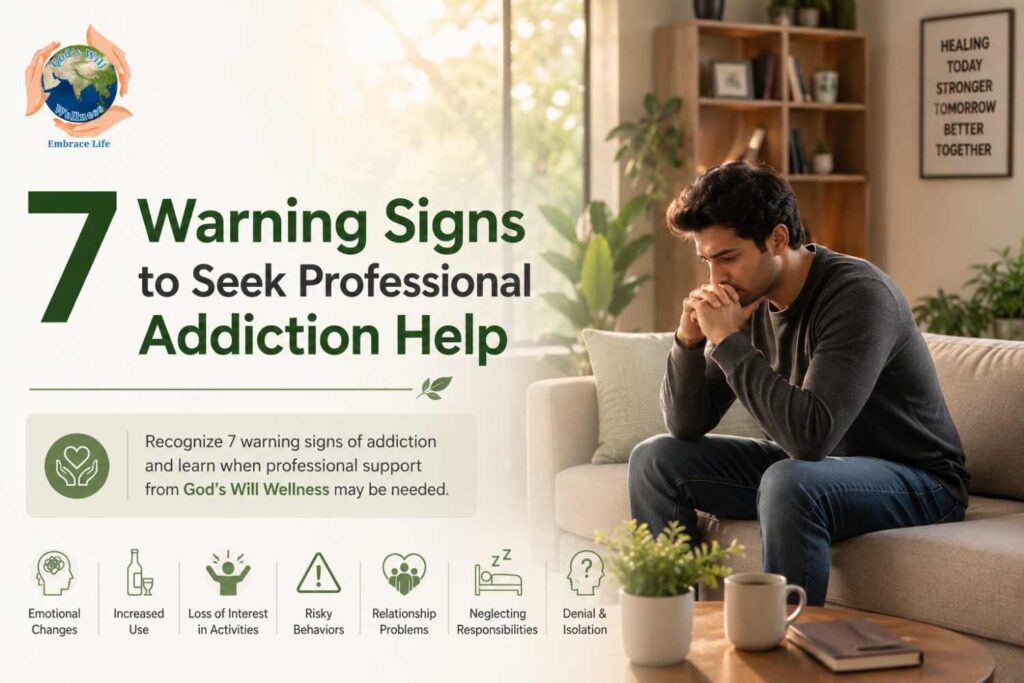
7 Warning Signs to Seek Professional Addiction Help

Though addiction can worsen a person’s physical health, mental wellness, social health, and overall quality of life, the damage doesn’t happen all at once. Addiction can steadily worsen, and its destruction can seem less severe as it becomes a habit and grows a dependency. Many families and individuals believe they can improve their situation on their own, without the aid of professionals. If the signs of addiction are ignored, the ability to recover will be harmed. The sooner signs of addiction are recognized, the more option there are to improve a person’s life. Addiction will be more challenging to manage the negative impact it has on life. Professional centers strengthen, counsel, and care for clients who desire to improve their lives through recovery. If you or someone you know is struggling with addiction to alcohol or drugs, gone are the times you needed to travel far away to find a quality rehab center. There are now successful establishments like God’s Will Wellness in Delhi offering affordable, quality rehab services. GWW strives to create a rehab facility that empowers people to become the best version of themselves through individualized recovery programs and addiction counseling and a caring recovery environment that helps clients rebuild their lives. Importance of early rehabilitation for addiction recovery Most people struggle to recognize the importance of getting professional help for addiction recovery that early to be beneficial. They believe help is not needed until addiction is beyond limit. Addiction is a severe problem that destroys the normal functioning of the brain and body. It alters normal behavior and therefore it takes a lot of professional help to be able to break the cycle of addiction. Over time, spending on the care of a loved one will increase because there will be a greater emotional and physical toll on the person. There are many positive outcomes to receiving treatment early. The patient can spot their addiction before it becomes worse. They can get help and gain professional advice and can learn better coping mechanisms. Patients can lessen the effects of their addiction on their personal and family life. One of the most effective best nasha mukti kendra in delhi ncr considers the reasons for a person’s addiction and not just the symptoms. This leads to a better chance of successful recovery. Warning Sign 1 – Alcohol or Drugs Becoming Part of Everyday Life The first of the five main addiction signs is alcohol or drugs becoming a part of your everyday life. This can be a sign of an addiction. The person can become dependent on the alcohol or drugs to help them relax, relieve their stresses, help them to sleep, and deal with their emotional issues. Substnace use can feel controlled in the beginning. This can change. There are many signs of addiction, including: You feel that you can’t go about your everyday life without alcohol or drugs. You can’t stop thinking about the opportunities that you will be able to consume drugs or alcohol. You have spent more time or money trying to consume drugs or alcohol. You have made the use of drugs or alcohol your priority. If someone is feeling that they can’t go about their everyday life without alcohol or drugs, than that person is most likely dependent on that substance. One alcohol rehabilitation centre in delhi can provide safety and help you to learn about your addiction and how to better cope with it. Warning Sign 2 – Personal and Family Relationships Are Suffering The second of the five main addiction signs is that personal and family relationships are suffering. When loved ones struggle with addiction, substance dependency can lead to broken relationships, arguments, and emotional distancing. People in addiction may use avoidance and defensiveness to react to expressed concerns and may use the same methods to avoid conversations about their behavior. The most common signs include: Rising Tension in Family Behavioral problems such as anger and disagreements are signs of rising levels of tension in the family. Neglecting Relationships A person may use addiction to avoid attending family and social gatherings and neglect relationships that are important to him. Substance Use is Kept Secret Addiction is driven by a fear of being judged, and individuals feel guilty about their use of substances. Secret keeping may be a sign of addiction. Family involvement is critical to rehabilitation. Effective treatment centers help in building communication, and they offer guidance to individuals and families involved. A leading de addiction centre in gurgaon not only aims to help individuals end substance dependency but also aims to help individuals improve their social and emotional wellness. Warning Sign 3 – Deteriorating Physical and Mental Health Substance dependency and addiction can cause mental and physical health to be significantly impacted. Physical health can be impacted due to the balance in the body being removed and determined by continued substance use of alcohol and drugs. Signs of addiction are largely physical, such as: Disturbed Patterns of Sleep Low Energy Chronic Fatigue Appetite Changes Poor Hygiene Signs can also be Mental and Emotional, such as: Heightened Anxiety Mood Swings Emotional Irritability Poor Emotional Control Chronic Feelings of Hopelessness Many people use substances as a means of avoiding emotional problems. Ironically and unfortunately, the opposite of the intended effect is what results from addiction. Understanding the relationship between addiction and mental health is the first step toward long-lasting recovery. Professional addictions treatment uses this understanding to provide clients with the skills necessary to cope with problems and manage their emotions in a healthy way. One of the best addictions treatment centers in Faridabad offers support for the recovery of both the mind and the body. Warning Sign 4 – Responsibilities Are Neglected When addictions become a serious issue, treatment of those addictions becomes the primary concern. Failing to perform everyday responsibilities is a major indicator that someone is struggling with substance dependencies. Things like focus, motivation, and the ability to perform tasks can be severely impacted. Someone who was dependent

nasha mukti kendra in delhi
Uncategorized

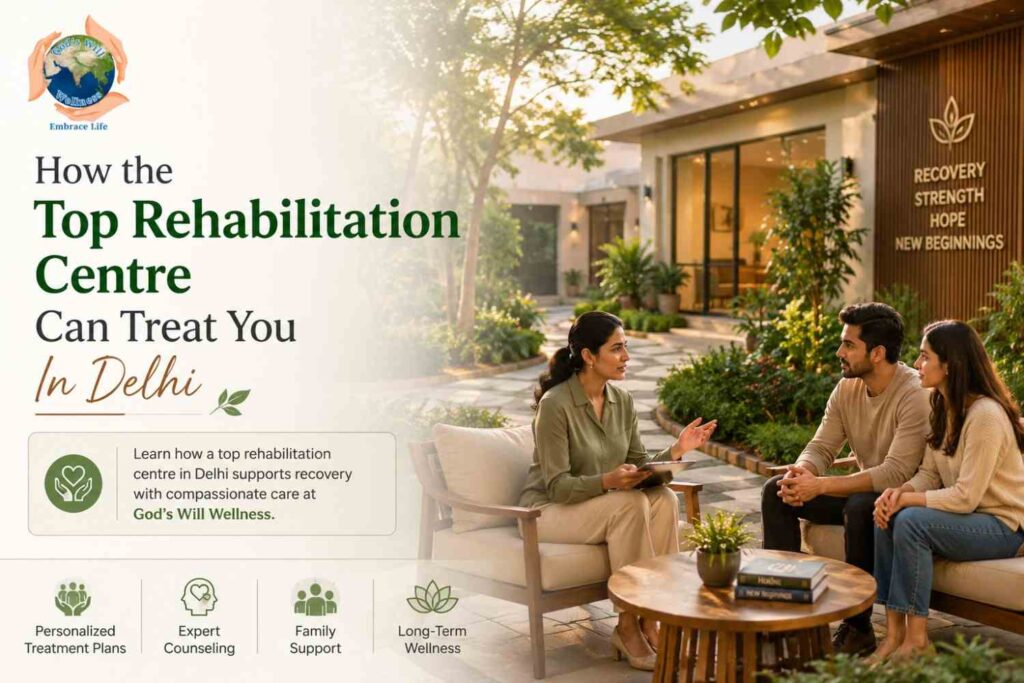
How the Top Rehabilitation Centre Can Treat You In Delhi

Nowadays, alcohol addiction remains one of the worst health-related issues for individuals and families. The casual drinking of alcohol can easily develop into alcohol dependency, which makes it even harder to quit drinking without help. By then, the alcohol dependency will negatively impact one’s health, emotions, relationships, career, and quality of life. The best part is that recovery can be achieved. Individuals can regain control of their lives and their future through the right guidance, treatment, and support. Seeking help from one of the rehabilitation centres in Delhi starts the process of recovery. If you or someone close is looking for the best nasha mukti kendra in delhi or the top alcohol rehabilitation centre in Delhi, knowing what treatment looks like can help you choose a more informed option. This guide presents the professional rehabilitation work and the reasoning for the need of each treatment stage for the purpose of long-term recovery. At God’s Will Wellness, each recovery journey is treated with kindness, with dedicated service that uses researched treatment techniques that aim to heal the mind, body, spirit, and emotions. Alcohol Dependency and the ‘Beyond the Physical’ A common belief is that alcohol dependency is a result of one being unable to control themself. The truth is that like all other addictions, alcohol dependency negatively impacts the functioning of the brain and alters its physical structure. Many people become aware of an alcohol addiction at a very late stage in their life. It’s common to see your friends or family using alcohol to relieve stress. Some people may develop a drinking habit as an easy or fun social activity. Gradually, it starts becoming a habit, and then it progressively becomes a part of their daily life. Some of the signs of alcohol addiction include: Loss of control of drinking behavior Strong cravings Drinking despite problems Withdrawal symptoms Neglecting responsibilities When it becomes a habit, a lot of people fail to recognize these signs due to normalizing them. This can lead to further psychological and physical issues. However, alcohol rehabilitation centers in Delhi can help to treat alcohol abuse and give professional care. Recovery from alcohol abuse is not about setting restrictions or punishing the patients. It helps the patients to understand their addiction and improve their self-respect and self-confidence. Step 1: Assessment and Professional Care Every journey to recovery from alcohol abuse is based on assessment and understanding of that individual. Addiction is not a homogenous experience and therefore treatment cannot be the same for everyone. A good rehabilitation centre in delhi will start their care process for alcohol addiction by assessing a patient in detail to understand: The patient’s use of alcohol over the years. The patient’s physical and mental health and wellness. The patient’s prior treatment episodes. The patient’s goal for treatment. Using this patient centered care approach, addiction specialists can design a treatment program that will address the specific needs of that patient. Why does Personalized Treatment Matter? Customized recovery plans that target the individual’s challenges have a higher chance of long-term success. Some individuals may need extra counseling, while some individuals may need family counseling and extended emotional support. Personalized treatment enables the professional to keep track of the individual’s progress, and the recovery plan can be adjusted accordingly. At God’s Will Wellness, the staff assesses and develops a plan for the individual at the beginning of the recovery process. This allows the staff to provide the necessary support and direction at each step of the rehabilitation process. Step 2: Safe Detoxification Detoxification is one of the first steps in the process of Alcohol Rehabilitation. Detoxification is the gradual process of the body getting rid of Alcohol and learning how to function without Alcohol. Many people underestimate how challenging the process of withdrawal can be and are unprepared for the process. Depending on the level of the addiction, the process of withdrawal can be accompanied by anxiety, sweating, headaches, nausea, sleeplessness, irritability, and an intense craving that can be debilitating. In some instances, withdrawal symptoms can be life threatening. Because of this, detoxification should never be done without professional oversight. The best alcohol rehabilitation centre in delhi provides a safe, caring environment for people needing detox, and the staff is trained to provide professional oversight. While withdrawal is in process, support is given for the symptoms to be managed in a safe and comfortable environment. Benefits of Professional Detoxification Professional detoxification provides numerous benefits. One, it minimizes the health risks that come with Alcohol withdrawal. Two, it provides emotional support during one of the most difficult phases of the recovery process for individuals. Lastly, detox helps individuals participate in their treatment more effectively by preparing them for the counselling and therapy that follows. Detox, by itself, is not the answer to the problem. The body is simply prepared for the remaining stages of rehabilitation, where emotional and psychological healing and change of behavior occur. Step 3: Counselling to Treat the Cause of Alcohol Addiction Success of recovery is more probable when treatment is aimed at the cause of alcohol addiction, rather than simply stopping the consumption of alcohol. People are able to identify the psychological, emotional and behavioral elements of their addiction and discover more productive methods to cope with the stressors and obstacles that life presents to them. The best nasha mukti kendra in delhi offers a variety of counselling strategies that are instrumental in achieving a comprehensive recovery. Individual Counseling Individual, or private, counsel gives a person the opportunity to speak about the things that they have gone through. Once counselors are aware of the emotional/psychological triggers, they are able to devise techniques and tools that enable the individual to cope and manage those stressors without the use of alcohol. Individual counseling also encourages recovery through the reinforcement of positive self-esteem and the improvement of one’s self-discipline. Group Therapy Therapy groups provide a place for persons with common challenges to support each other. People acknowledge the value of listening to other recovery

Counseling, Health and Wellness, Mental Care, Poormind, Psychiatrist, Psychology, Rehabilitation Centre, Therapists

10 Questions Families Should Consider When Choosing a Nasha Mukti Kendra

Choosing a rehabilitation center for a loved one who is an addict is an enormous decision for a family. Alcohol, drugs or even prescription medication can be difficult to give up. Having an addiction is a hard struggle, but there are several options for treatment. The first step to recovery is seeking help. The sooner treatment begins, the better the chance for the addict to be able to permanently stop the cycle of addiction. Not all rehabilitation centers are the same. The levels of counseling, medical help, and treatment options are not the same in every center. It is very important to review each center and the options that they provide so that you can make the best choice for your loved one. When you look for a nasha mukti kendra in Gurgaon or a nasha mukti kendra in Faridabad, the right questions will help you find a center that is much more focused on the healing aspect for the person and not just the treatment. Here at God’s Will Wellness, we are firm believers in the fact that educated choices when selecting a rehabilitation center provide far better chances for recovery. There are ten important questions that allow for a center to be selected with a higher chance of focused rehabilitation. Choosing the Right Rehabilitation Center is Vital The effects of addiction touch every aspect of the life of the person struggling with it. Recovery is a multifaceted process and cannot be viewed through a focus on just the substance of choice. Rehabilitation centers offer all the necessary tools needed in order to discover what led the individual into addiction and to offer them more beneficial ways of dealing with stress. When choosing the facility, families should look at all the options provided by it. The best options will have holistic approaches, knowledgeable professionals, and long-term aftercare. The questions below should help you with your selection. Question 1: Does the Center Provide Customizable Treatment Plans? Addiction has many forms, and no two addicts reach the end of their addiction by the same means. Some may have a dependence on recreational substances while others may have a dependence on alcohol to the point of being a social drinker due to unaddressed mental trauma. Because the road to recovery is different for each individual, treatment plans also need to be different. The best nasha mukti kendra in Gurgaon begins every recovery program with a detailed assessment of the individual by a team of doctors, counselors, and therapists. The team then creates a treatment plan based on their review of the individual’s medical history, level of addiction, and emotional state. Common elements of a customized recovery plan may include the following: Improved outcomes through targeted treatment Individual counseling sessions Treatment provided through the appropriate therapy methods Progress is monitored on the continuous basis Addiction centers that provide customized treatment remain the best option for a long-term recovery. Question 2: Are There Sufficient Addiction Specialists and Trained Counsellors? The road to recovery requires the guidance of professionals with the proper training. Addiction from a medical standpoint can also have its roots in psychological concerns. Professional counselors help individuals: Identify when they need help Control their urges Better cope with the situation Control their emotions Build their confidence Counselors of an experienced rehab center in Gurgaon should also continue their monitoring throughout the recovery process. At God’s Will Wellness, counselling is integral to rehabilitation, and emotional healing is essential to controlling relapse. Question 3: What Therapy Is Available Here? At God’s Will Wellness, therapy is fundamental to overcoming addiction. The cessation of drug or alcohol use alone is insufficient. The reason the person fell into addiction must be acknowledged. A good rehabilitation center in Faridabad has multiple therapy options to choose from. Individual Therapy Individual therapy provides a safe space for the individual to express their concerns, fears and emotions privately. Group Therapy Group therapy promotes a safe space for individuals to share their experiences and to listen to the experiences of others and to stay committed to the recovery program. Family Therapy Family therapy provides a safe space for the family to understand the effects of addiction on the family at large, to learn how to promote healthy recovery in the family and how to communicate. When choosing the nasha mukti kendra in Faridabad, be sure to ask what counseling is included and how frequently is it provided. Question 4: Does the Centre Focus on Long-Term Recovery Instead of Short-Term Treatment? Many people think that rehabilitation is complete when the detoxification or clean phase is over. The detoxification phase is actually the first step in the recovery process. There are essential elements in a rehabilitation program after treatment. The best Nasha Mukti Kendra in Gurgaon prepares and equips their clients to prevent relapse and better their way of living by teaching clients to manage and balance stress, routine, emotional and mental wellness. God’s Will Wellness believe recovery does not stop after treatment. Ongoing support and aftercare services help to improve and sustain their progress while minimizing the risk of relapse. The treatment environment has an effect on recovery. The recovery of an individual in rehabilitation from addiction is best facilitated in a stress-free environment where they feel they have the assistants, respect, and understanding they need. Quality rehabilitation from a center in Faridabad offers a safe and healing environment to their clients. Evidence of care and how clients are treated is present when visiting a rehabilitation center. You will observe care in the following, the environment will be well maintained, daily activities are self-improvement based, and staff are respectful to all clients. At God’s Will Wellness, care is integrated in an environment of emotional wellness, personal improvement and long term recovery. All clients are treated with respect and care by all staff during their recovery process. Making an Informed Decision Starts with the Right Questions Choosing a rehabilitation centre is often a stressful experience with families feeling the pressure to place their

Where healing meets hope, and every step leads to recovery.

HOME
ABOUT US
CONTACT US
TREATMENT
GALLERY
OUR FACILITY

CONTACT US

© 2026 Designed By Digihulks

Scroll to Top